CASE
Conceptualize and test three solutions for air traffic controllers at NATS
INDUSTRY
AVIATION
CLIENT
NATS

OVERVIEW:
About the Project:
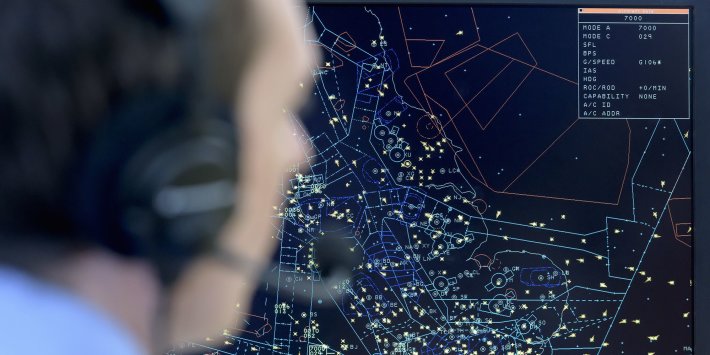
NATS (National Air Traffic Services, now NATS Holdings Limited) provides air traffic control services for 15 of the UK's largest airports and manages all upper airspace over the country (including London FIR, Scottish FIR, and Shanwick Oceanic).
In 2023, the company embarked on a project to explore innovative solutions aimed at reducing the stress levels of air traffic controllers.
ABOUT ME IN THE PROJECT:
My Rol:
UX Research:
- Analyzed the flow of incoming and outgoing flights at airports.
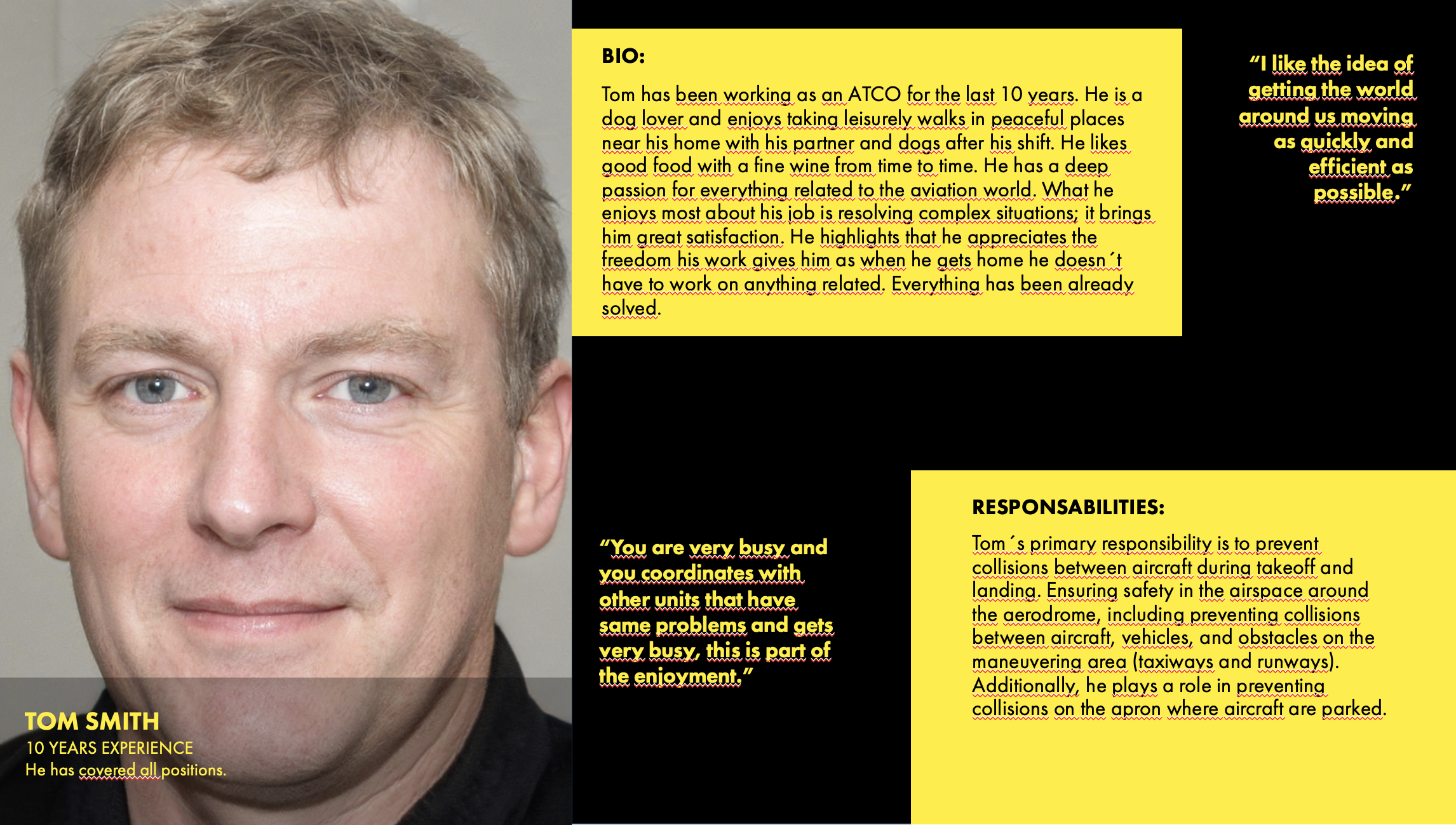
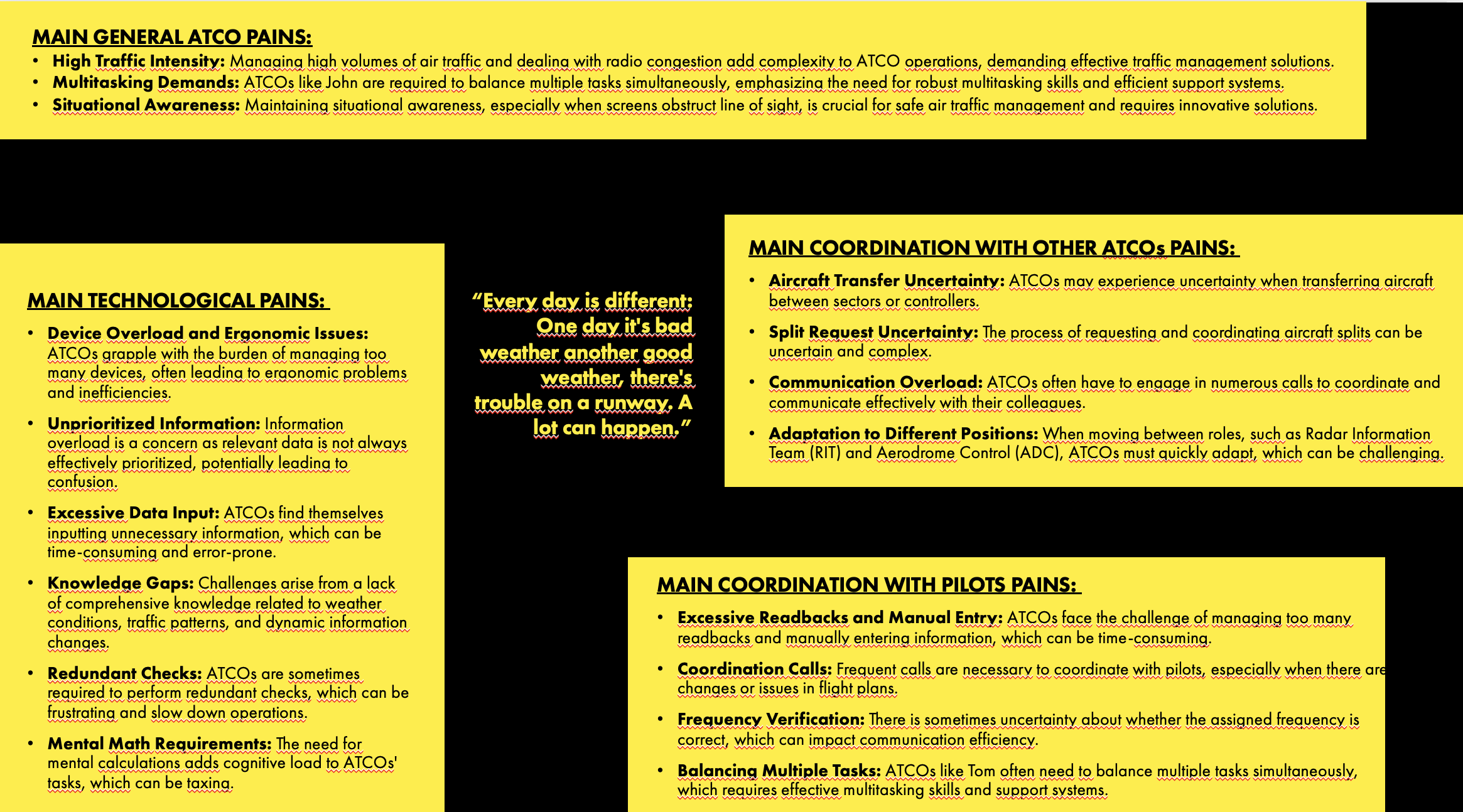
- Led the interviews with air traffic controllers to understand the working conditions and unique challenges faced by three types: ground, air, and radar traffic controllers.
- Explored the actions taken during high-stress situations, including the processes involved when controllers join or split positions.
Functional Definition:
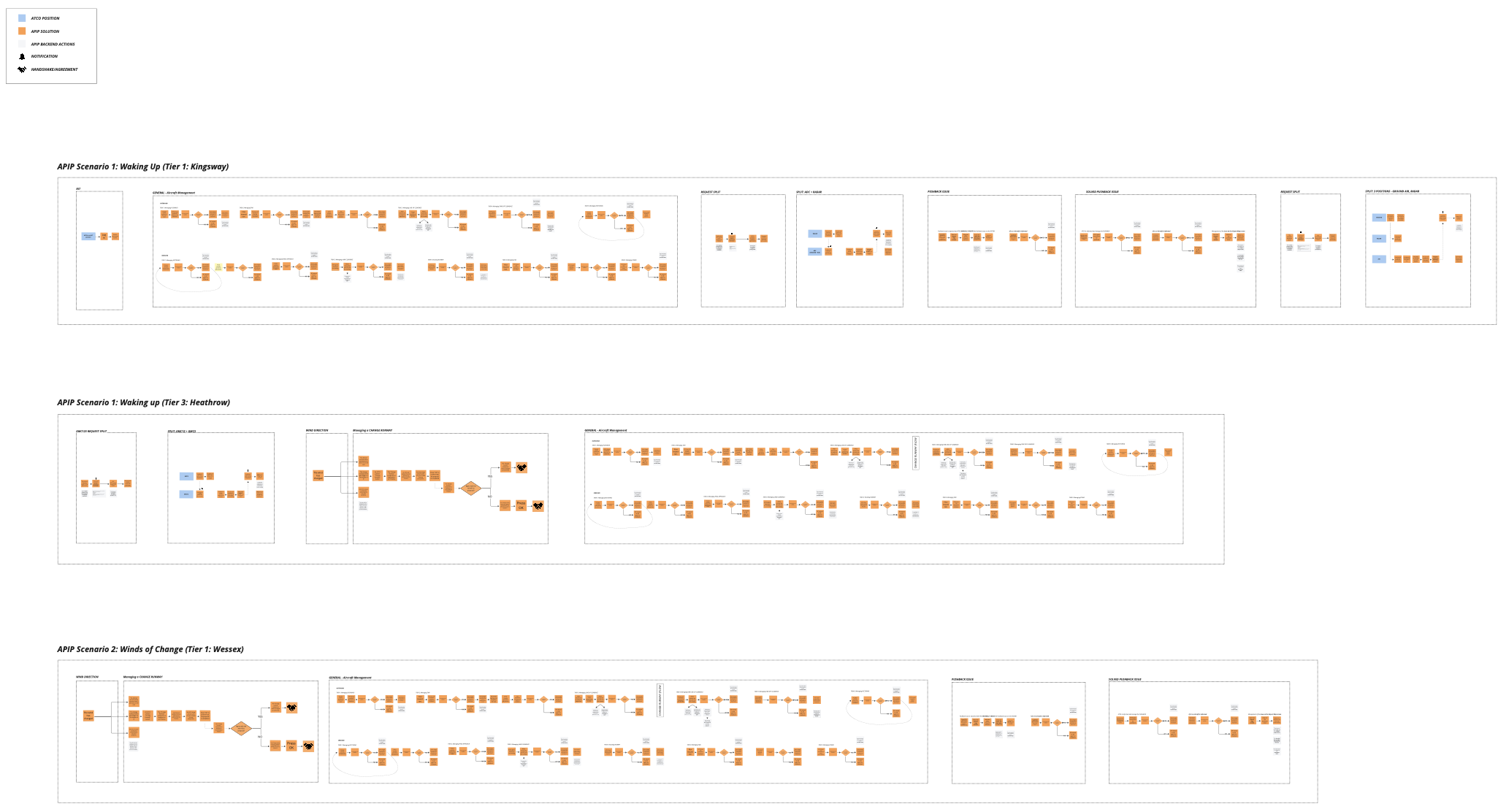
- Led the functional meetings with the technical team and air traffic controllers.
- Developed a detailed functional definition for the proposed solutions.
User Testing:
- Led the planning and execution of user testing and interviews over the course of a month at NATS headquarters in Whiteley, England, gathering valuable insights from real-time user feedback.

DEFINING THE SOLUTION:
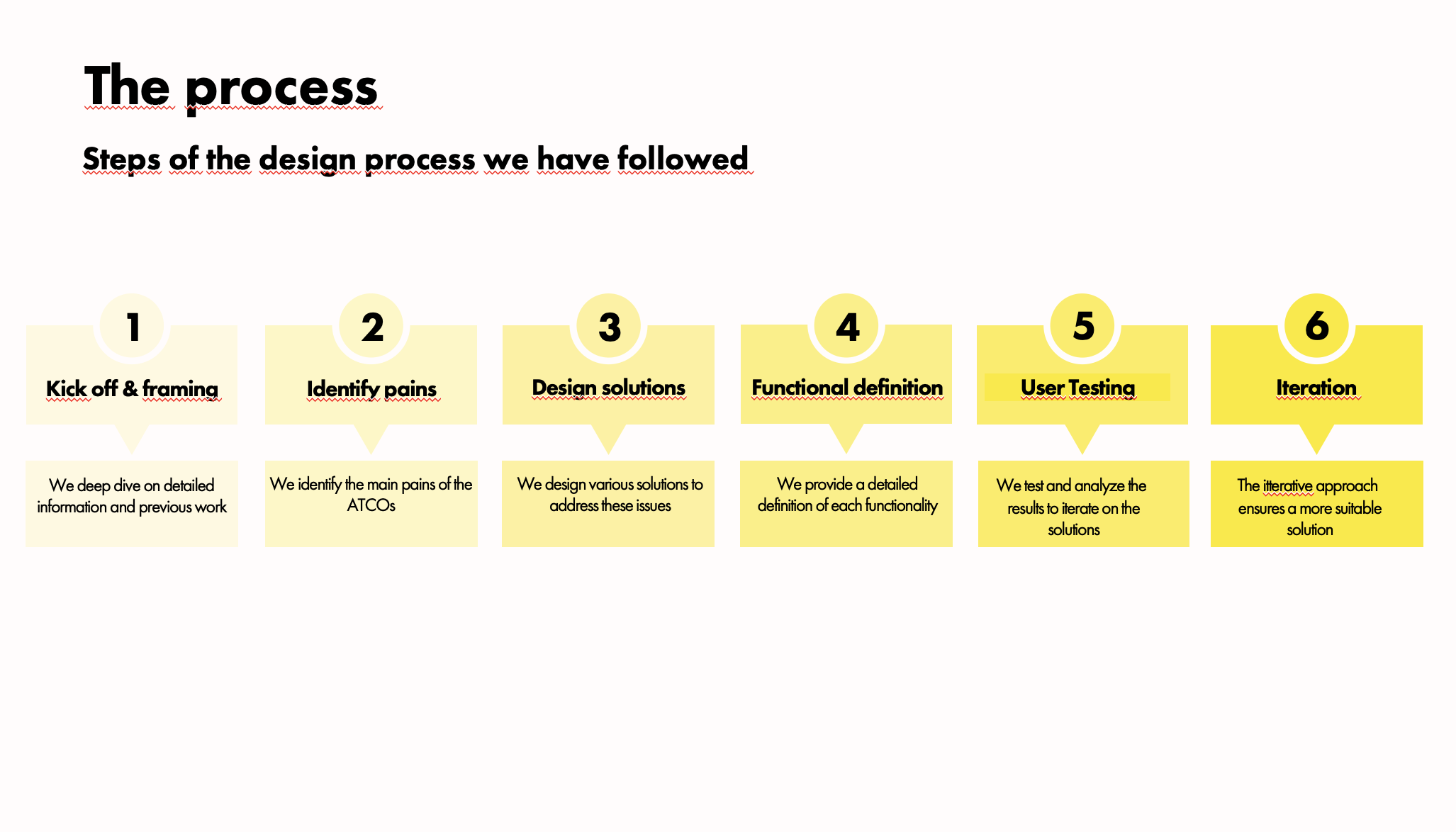
The Process:
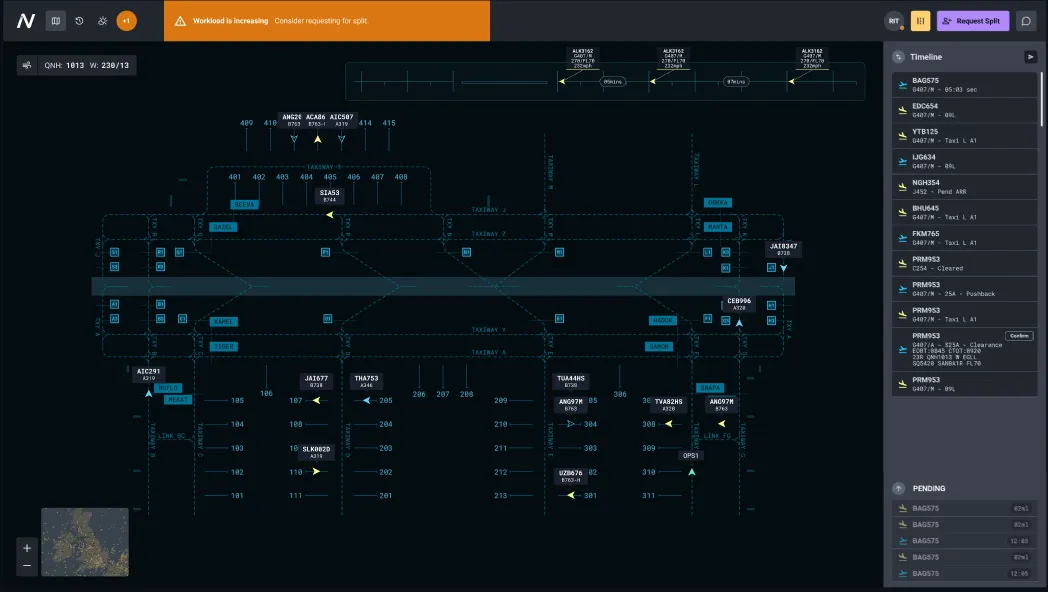
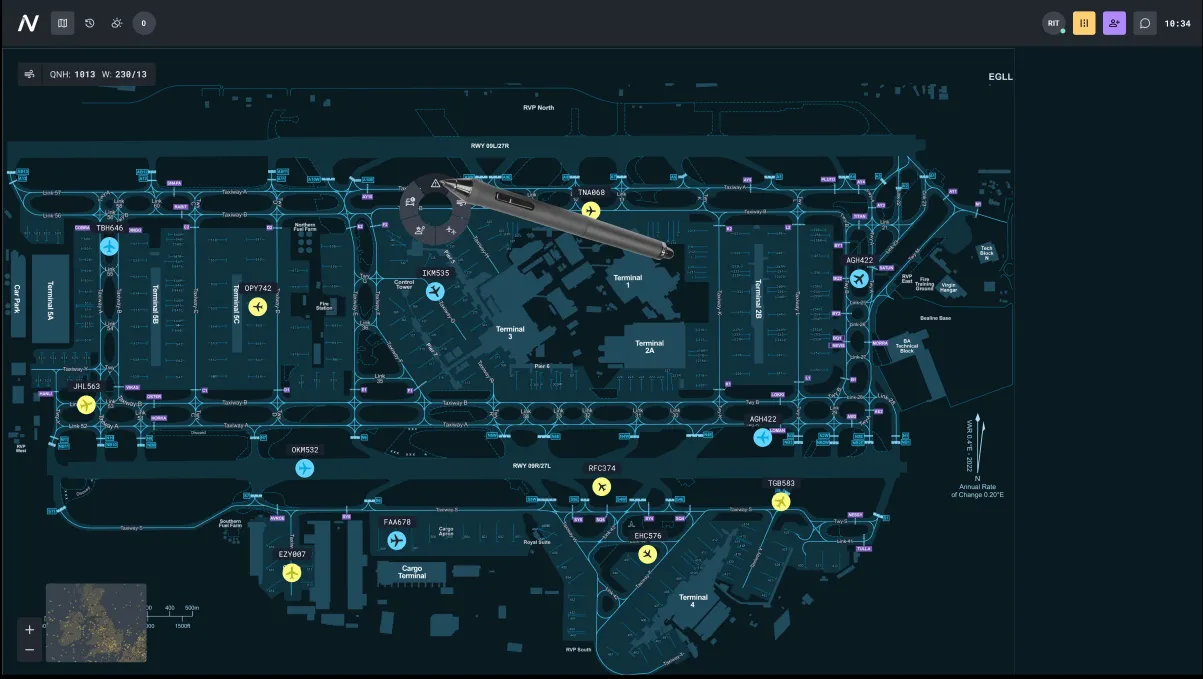
Based on the insights gathered from research and user testing, we crafted a solution that directly addressed the pain points of air traffic controllers. First, we identified and categorized the 15 UK airports into three distinct typologies, allowing us to design tailored solutions for each type of control environment—ground, air, and radar.
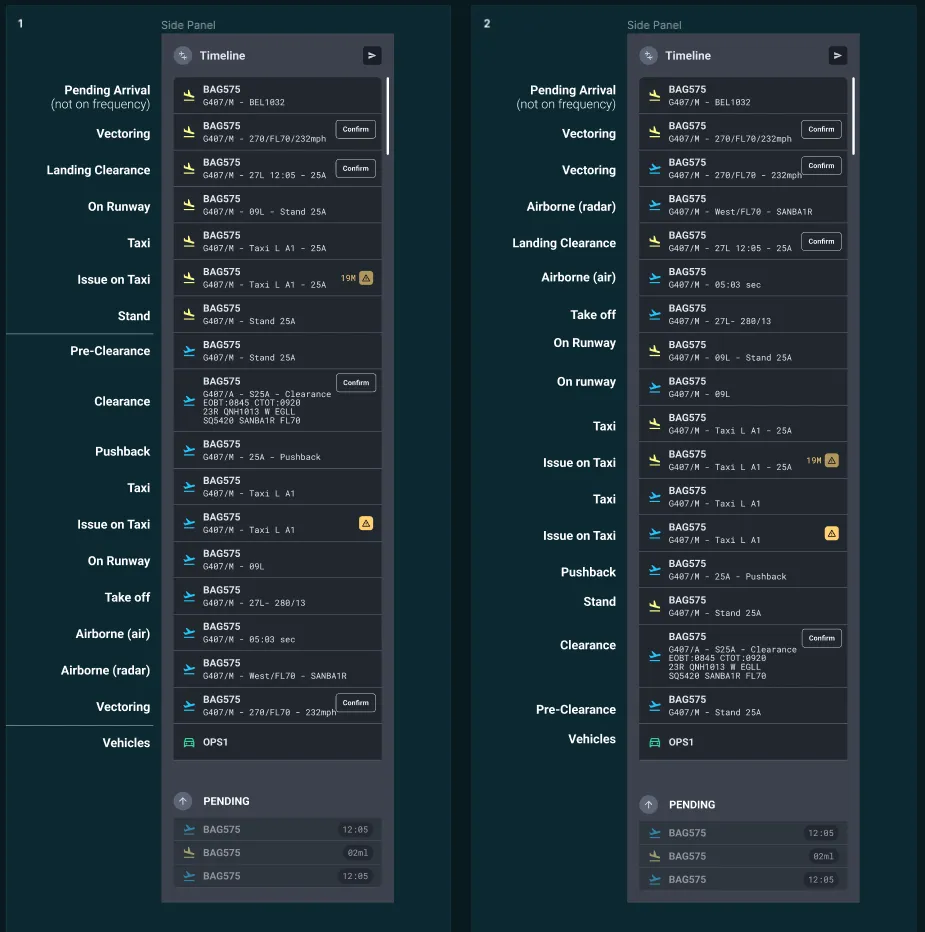
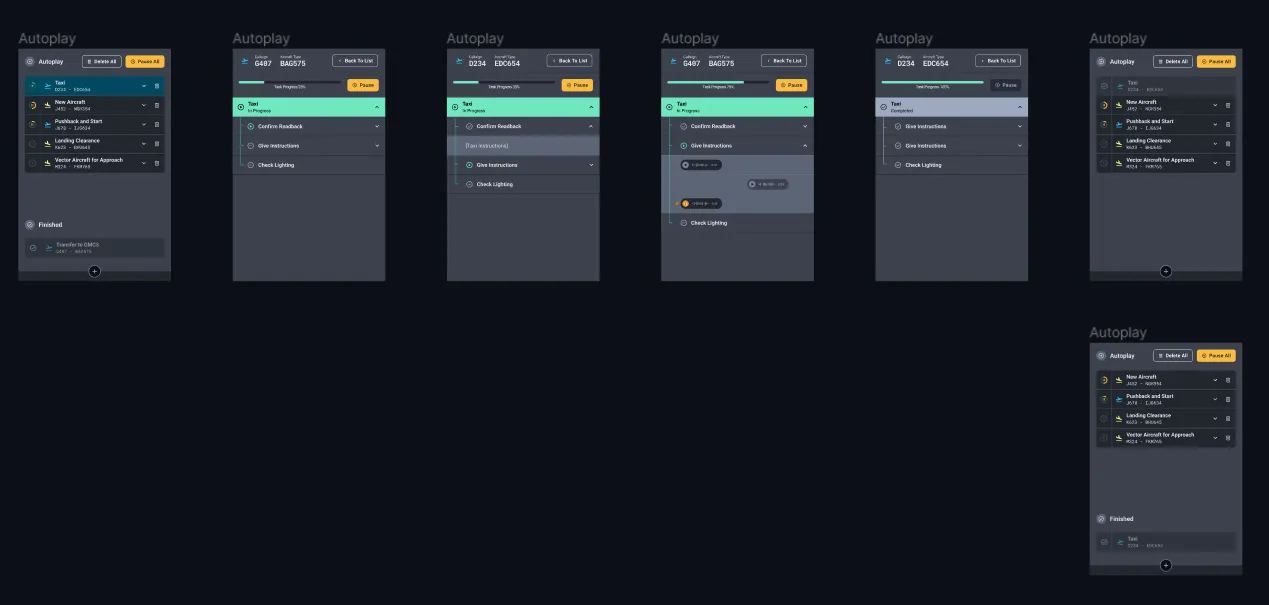
The interviews with controllers highlighted the need to simplify workflows and reduce the visual load during high-pressure moments. We integrated these findings into our functional definition, focusing on reducing the cognitive load by streamlining the system’s interface, enabling more efficient monitoring and decision-making. Additionally, we explored automation features to assist controllers during peak stress situations, including times when they needed to join or split positions, further enhancing the overall workflow.
In the testing phase, we tested the solution and incorporated the results from the user testing sessions directly into the functional definition, which remains current and in use today. During this process, we also defined the next key areas for testing, with a particular focus on the automation of tasks to further enhance efficiency and reduce stress for air traffic controllers.