CASE
Design and test a certification and value chain model to promote biodiversity and traceability in Spanish dryland agriculture, with 14 pilot projects.
INDUSTRY
ENVIROMENT & BIODIVERSITY
CLIENT
SEOBirdlife
OVERVIEW:
About the Project:
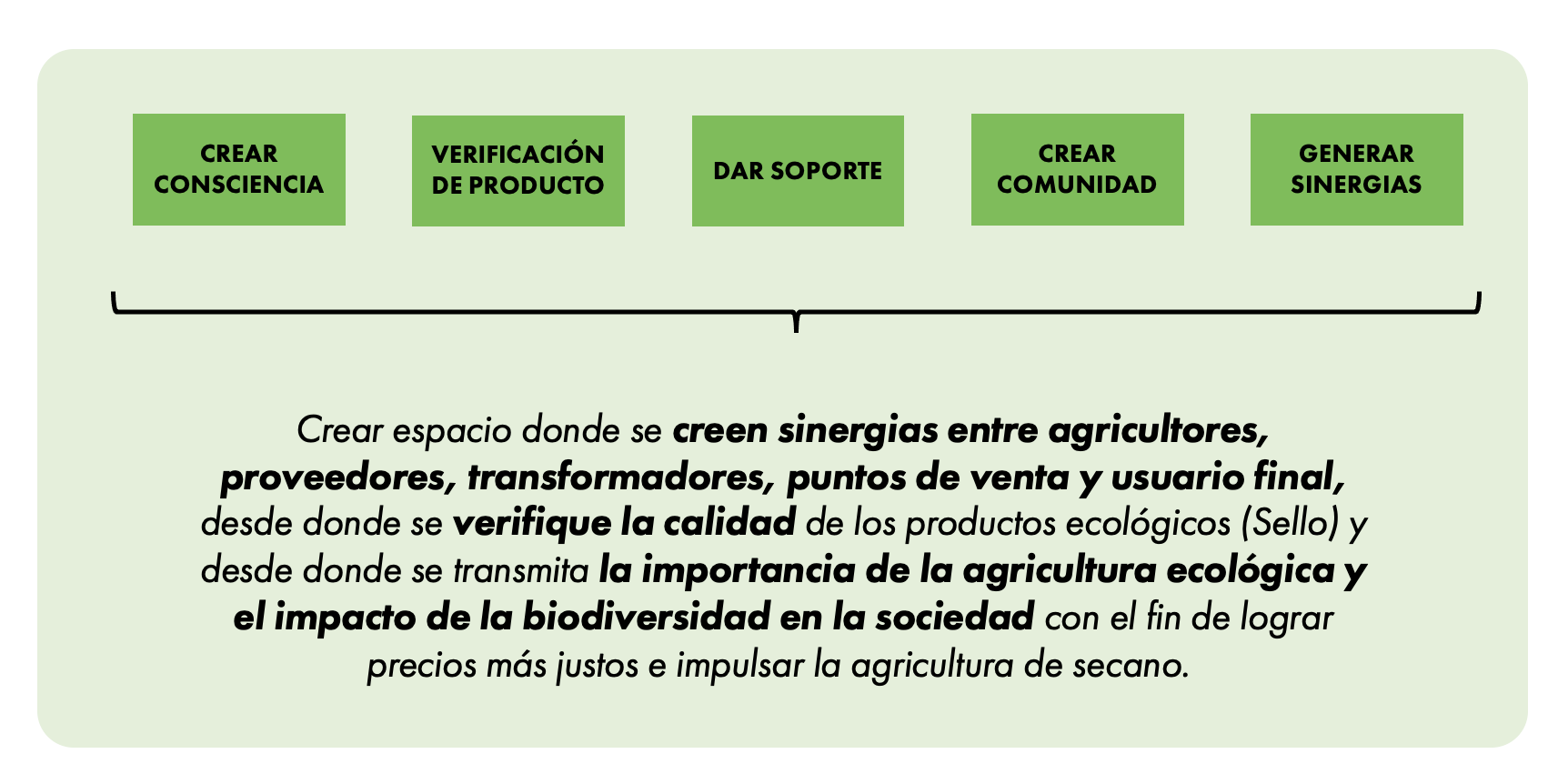
Secanos Vivos is a project aimed at promoting biodiversity
in agricultural ecosystems through the development and testing of a new ecological certification seal.
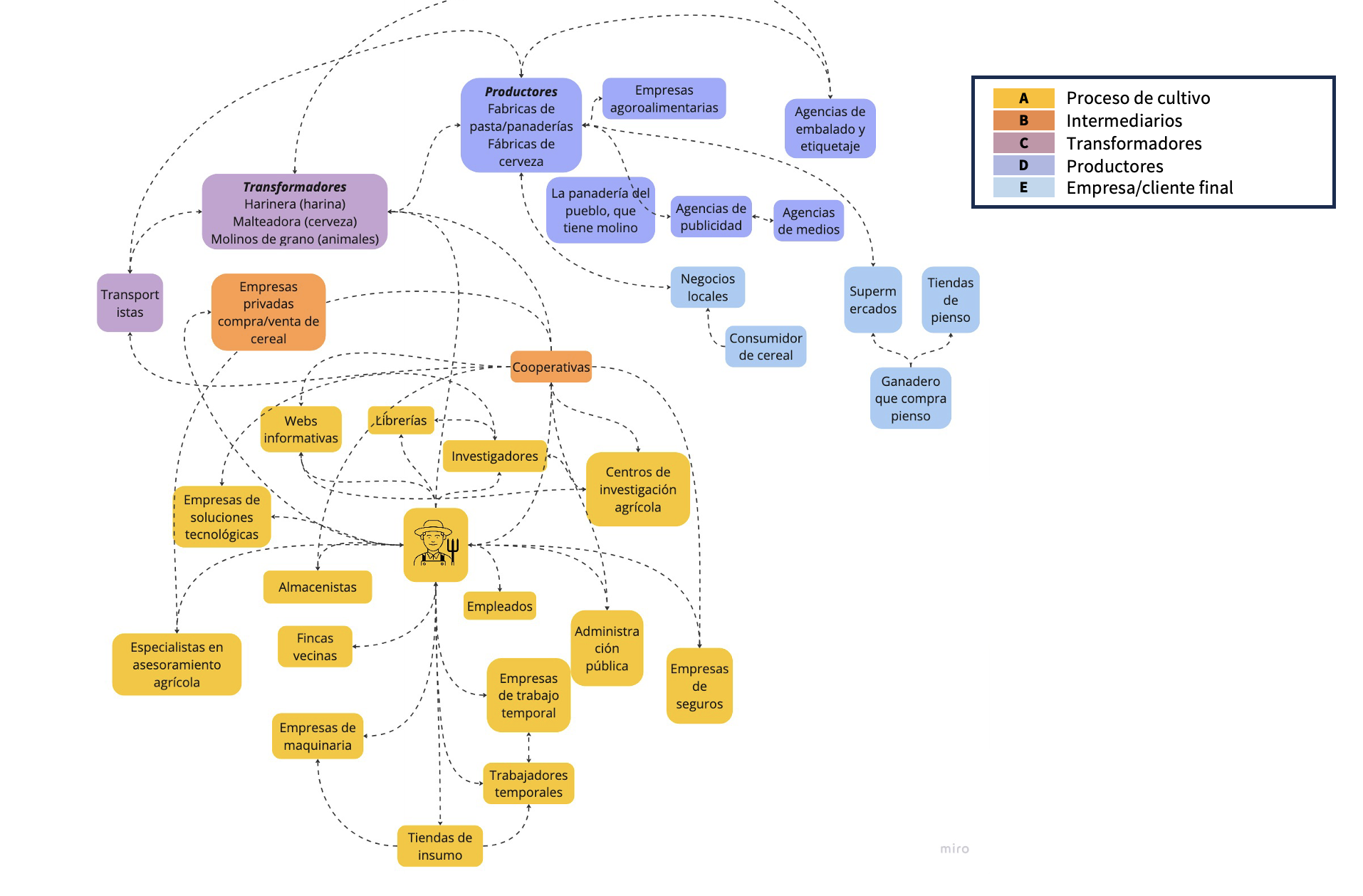
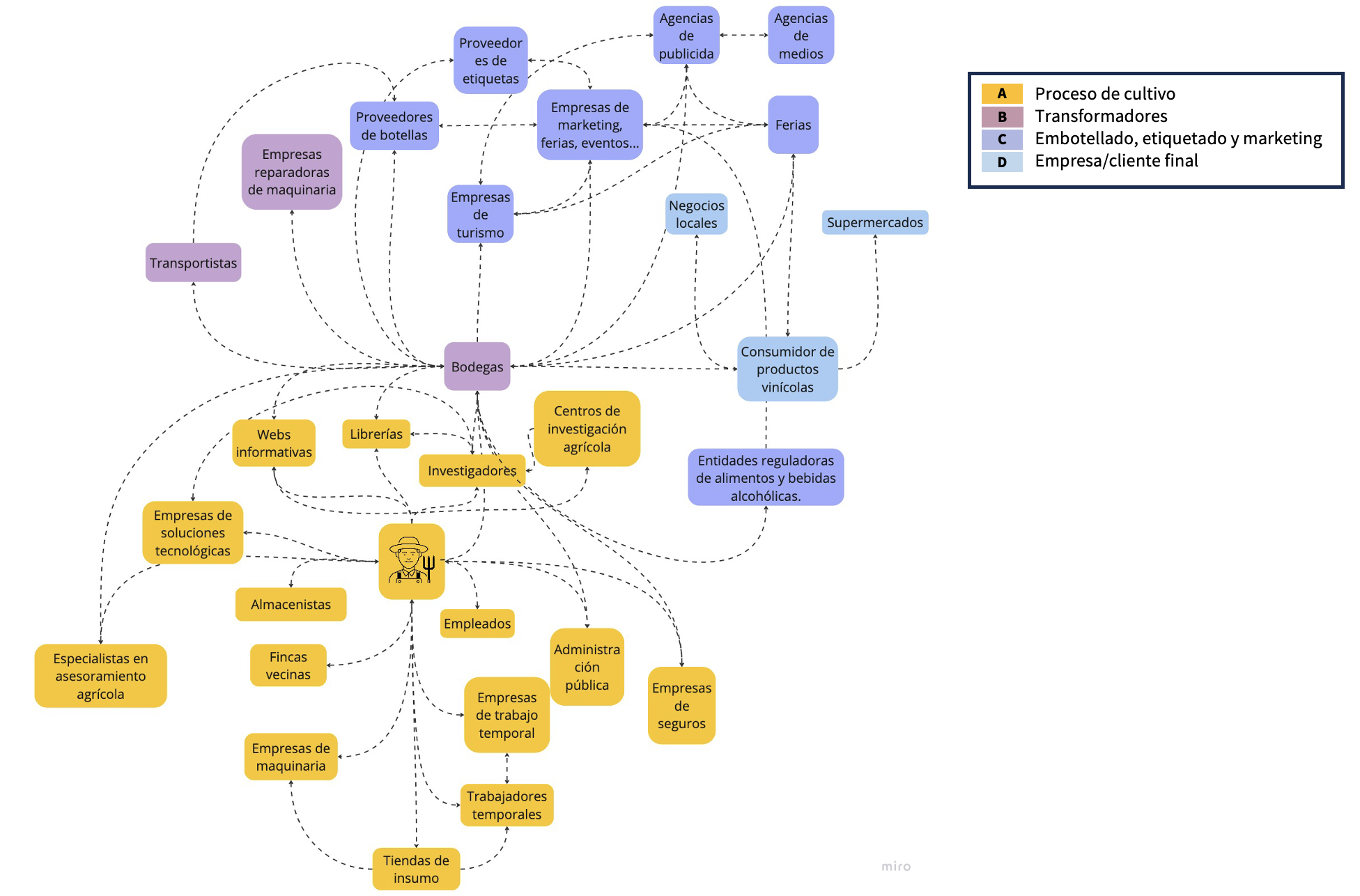
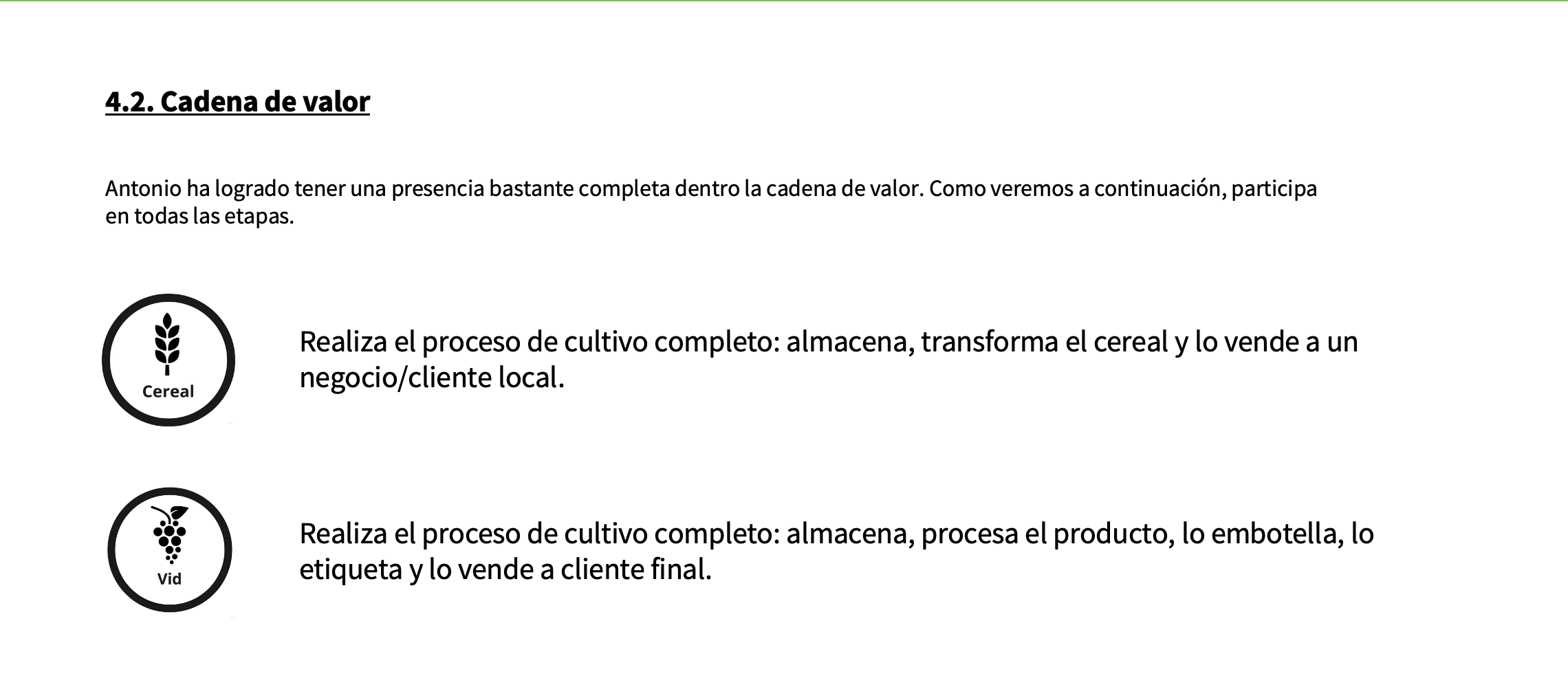
Our work focused on analyzing the value chains of cereal and vineyard production across
14 pilot sites in Spain, with the goal of strengthening the role of farmers
and preserving traceability throughout the process.
The project sought to ensure that biodiversity could become a differentiating and valuable factor
both for producers and for European consumers.
The outcome was a validated certification model based on biodiversity impact,
as well as a set of pilot-tested strategies to shorten and reinforce the agricultural value chain,
ensuring farmers retain ownership and visibility of their products throughout.
MY ROLE:
My Role:
As a Service Designer, I was responsible for:
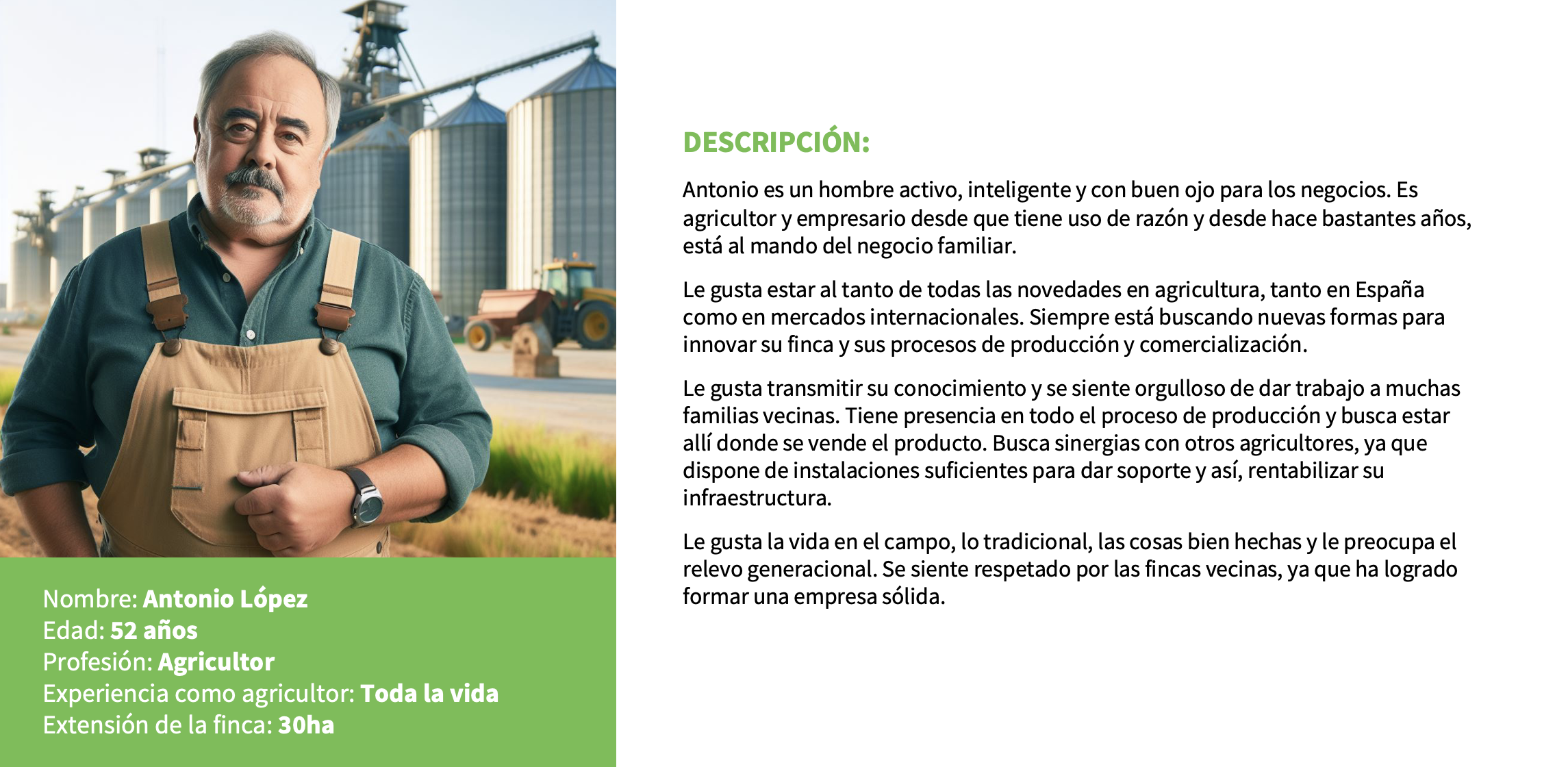
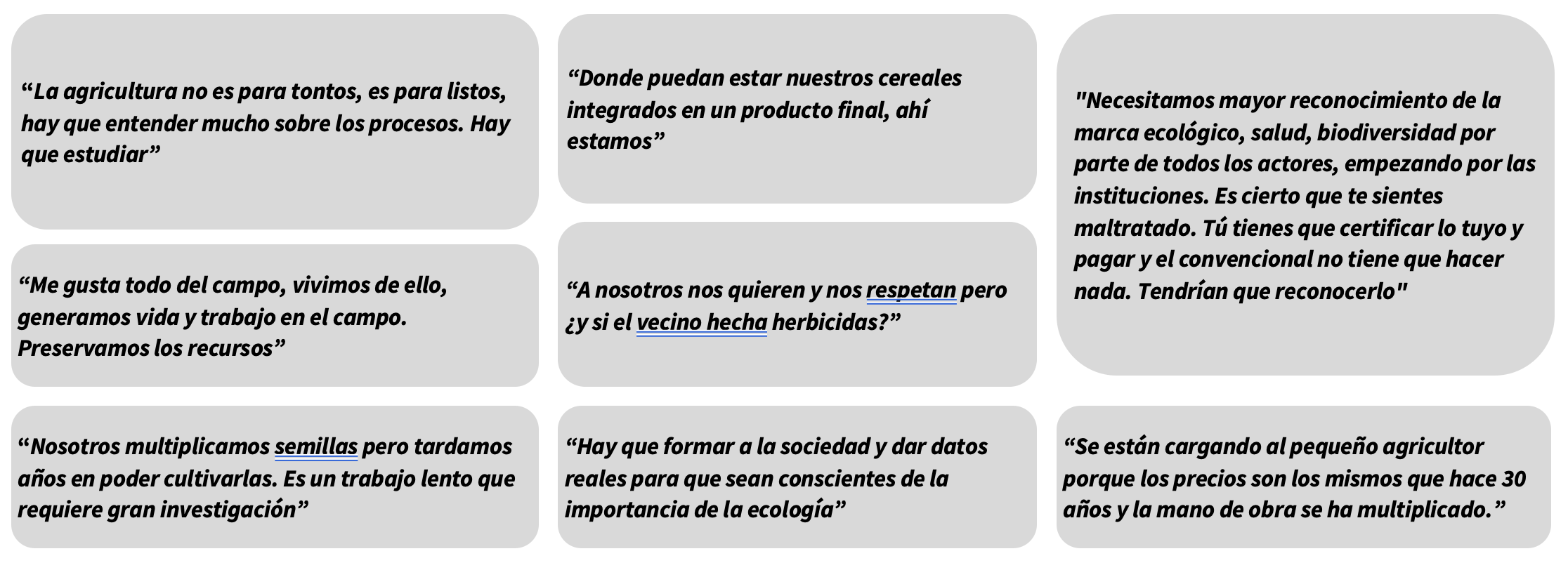
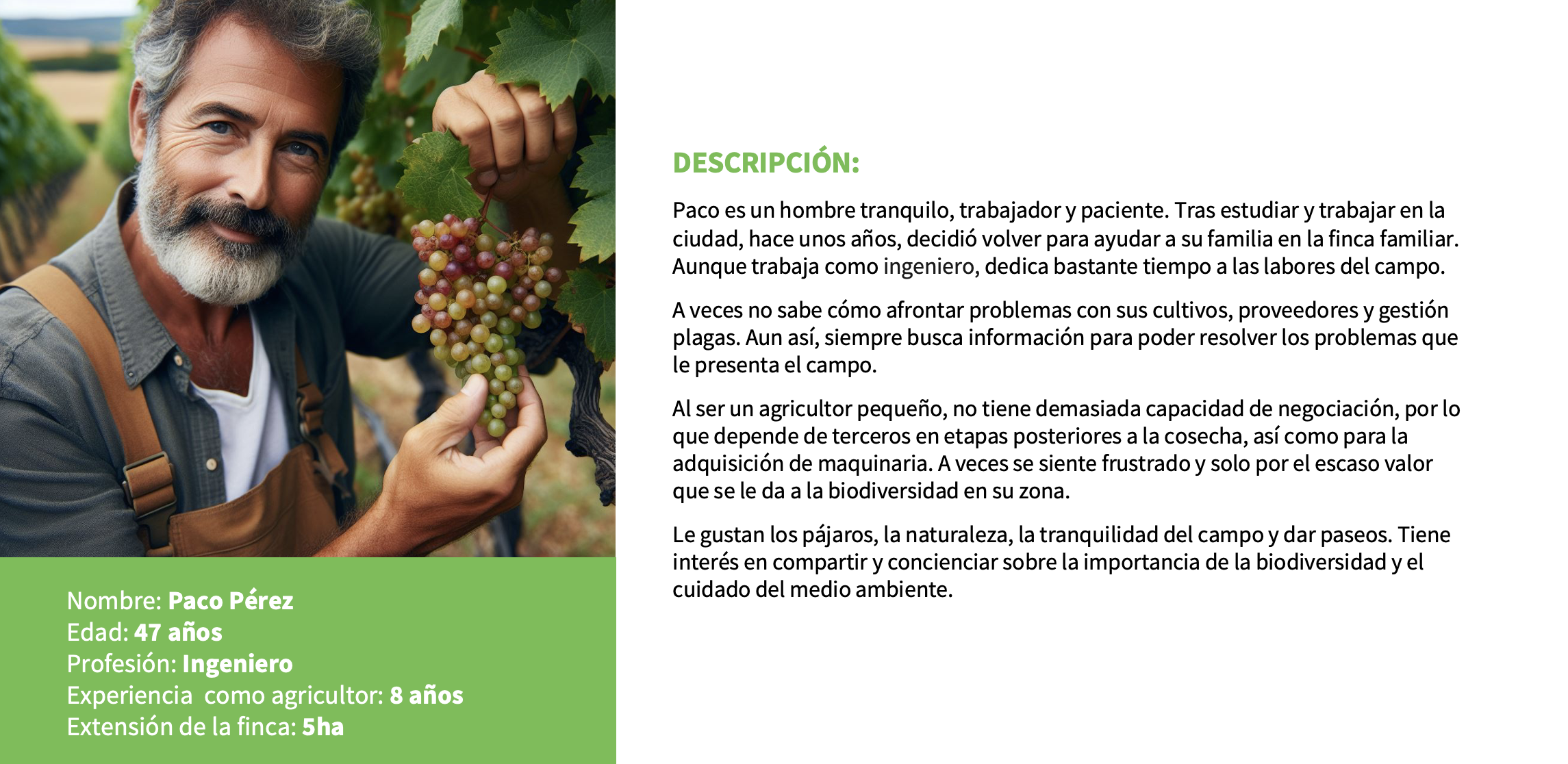
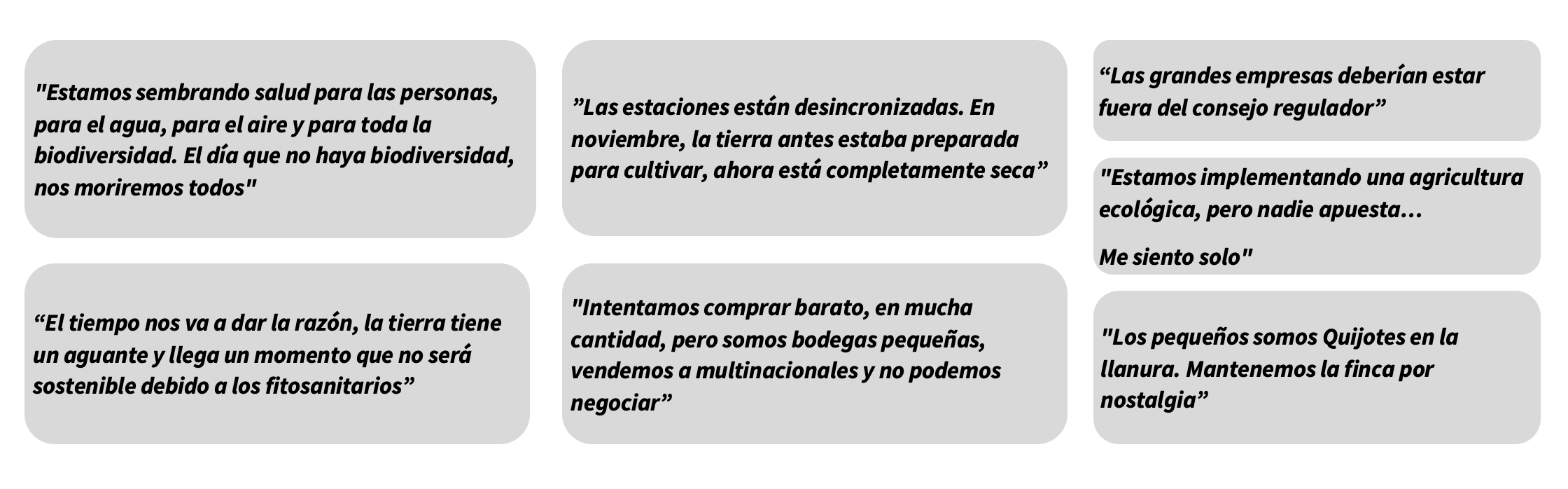
- Designing and conducting in-depth user research through focus groups, interviews, and demand analysis across European markets.
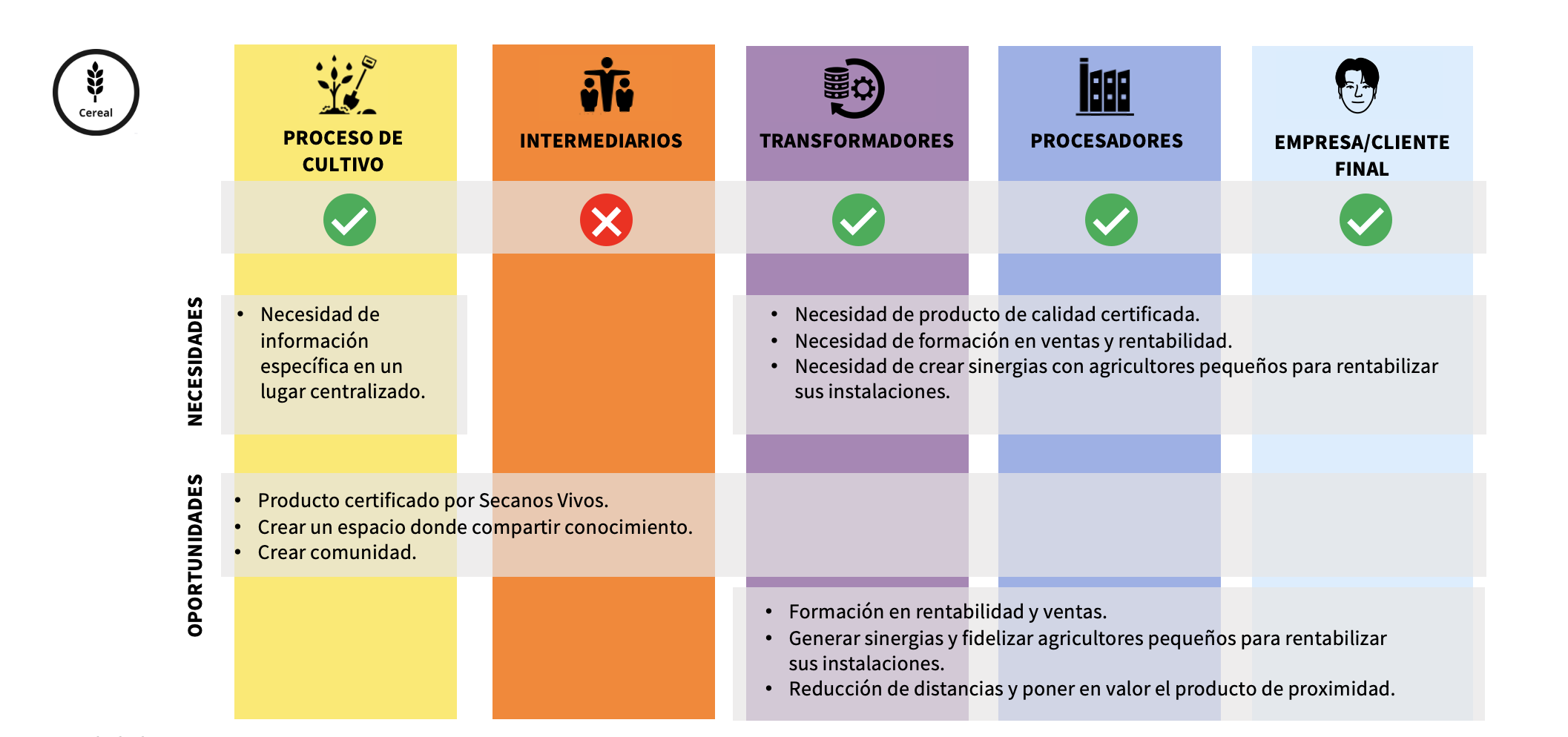
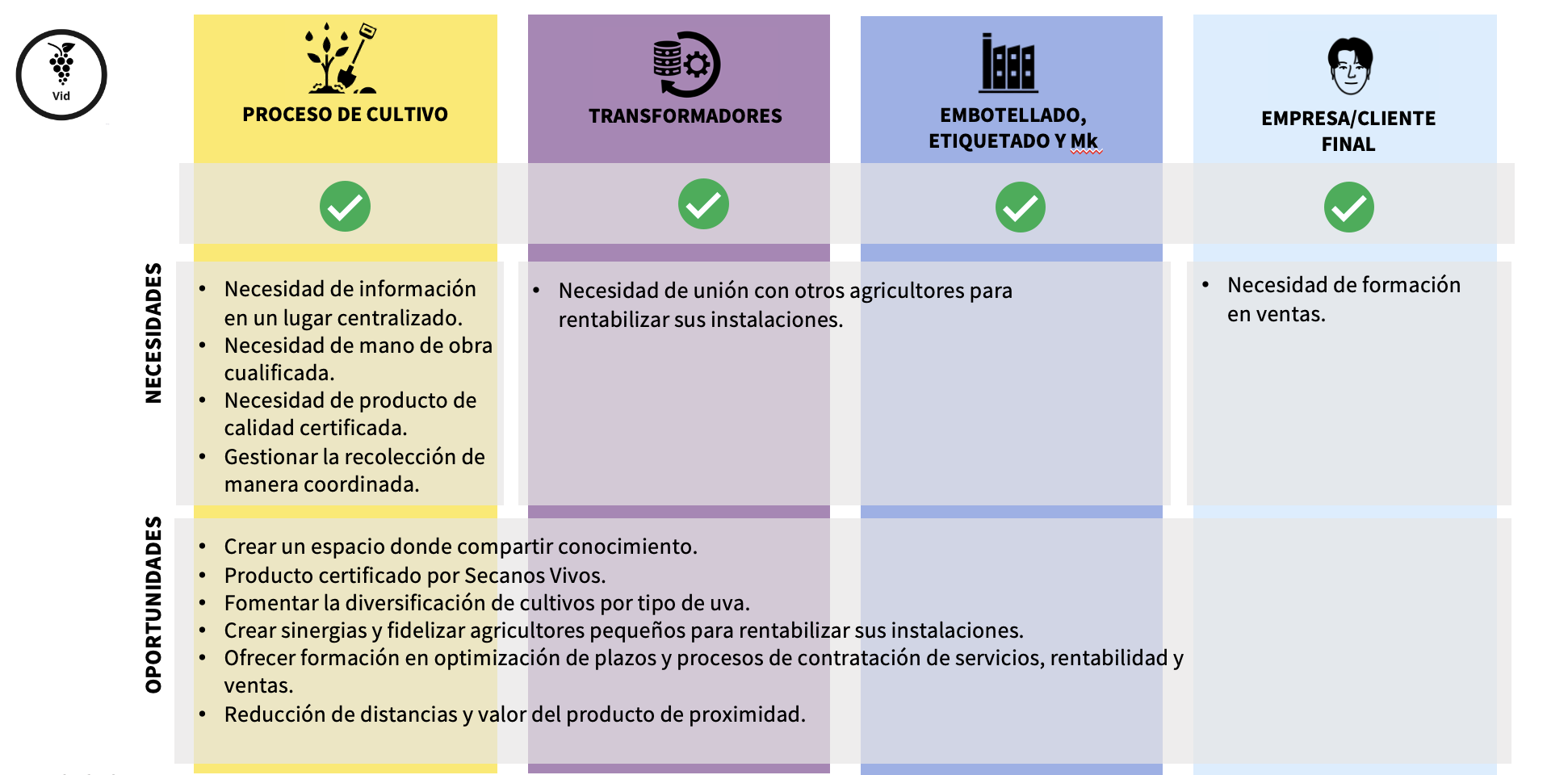
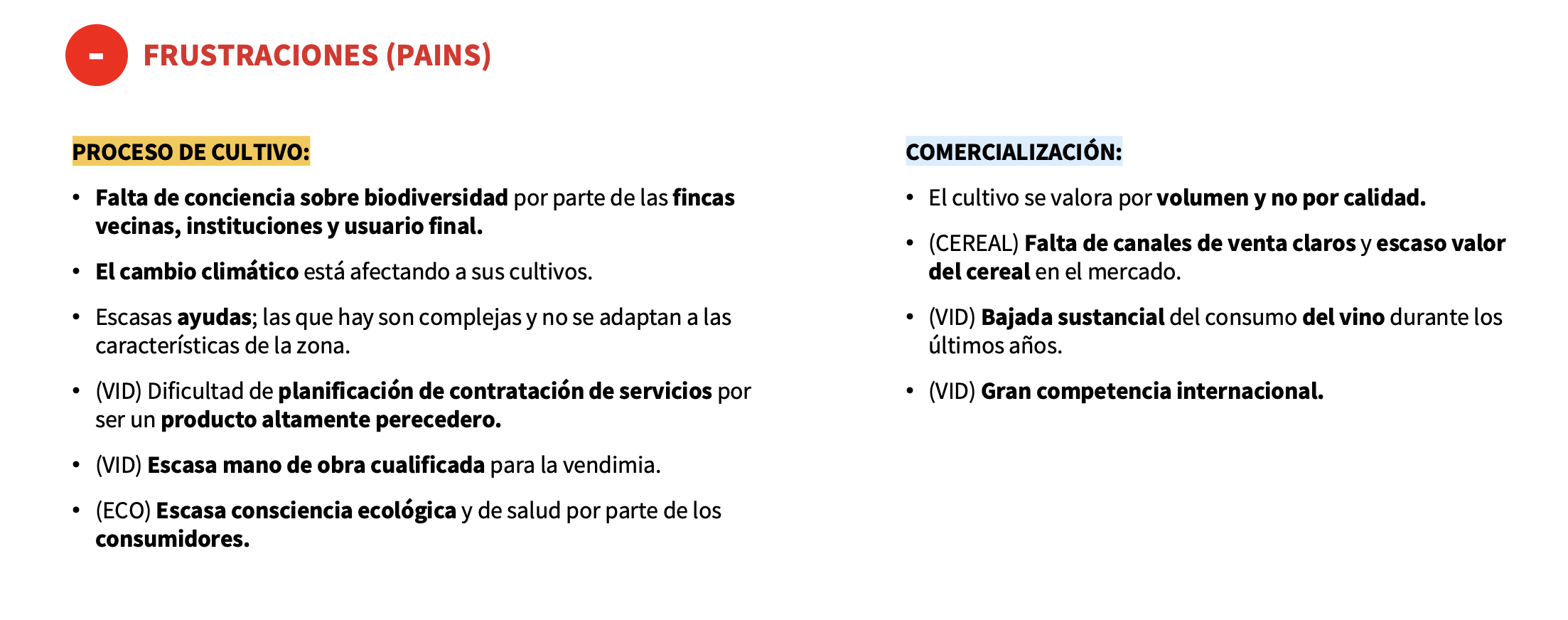
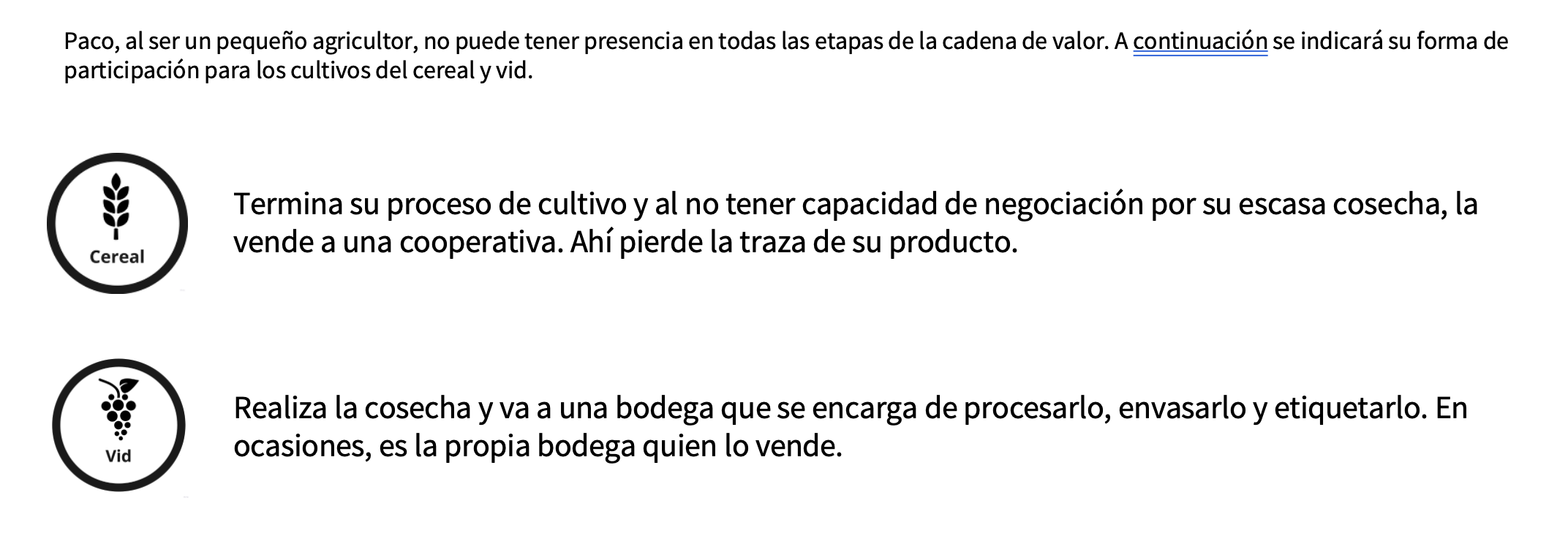
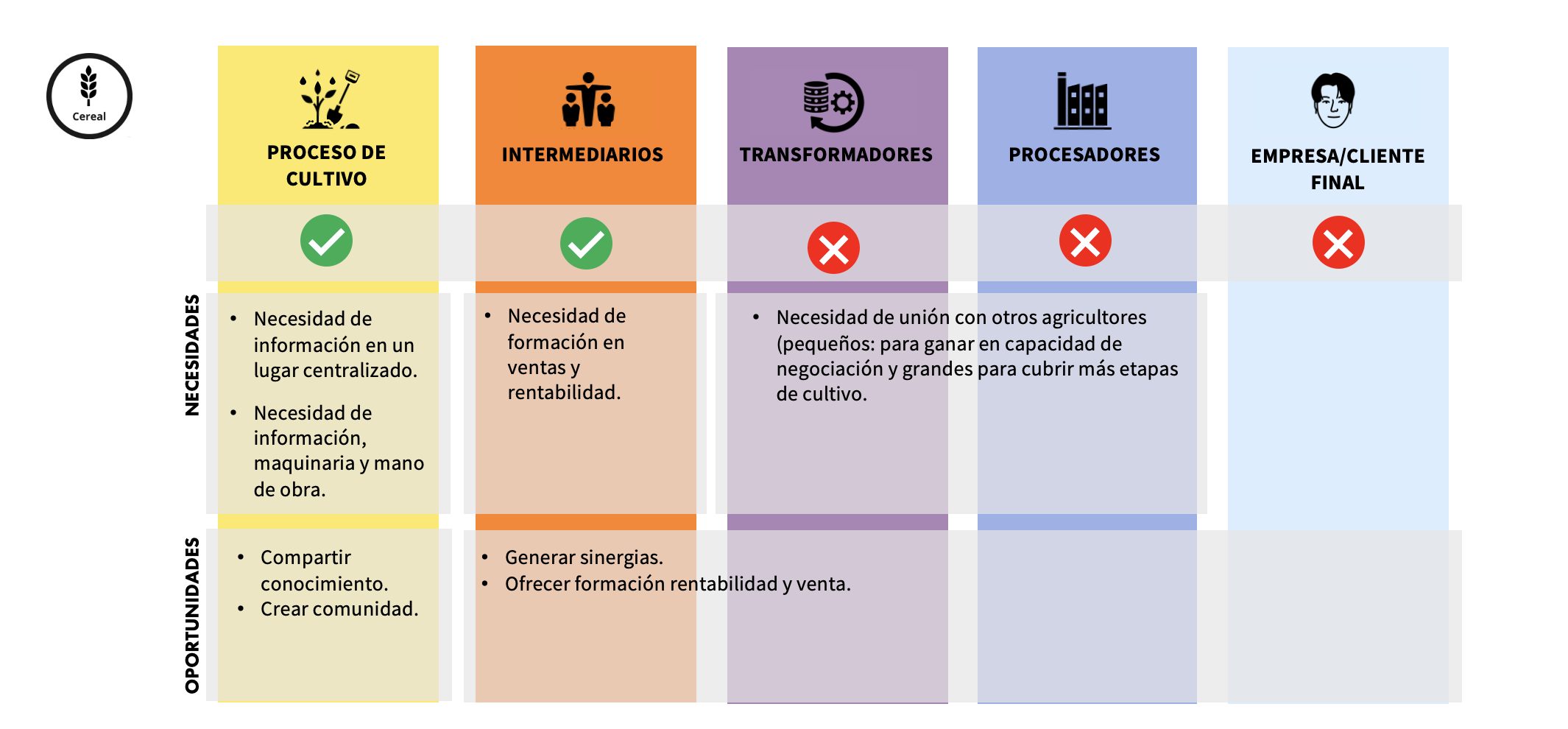
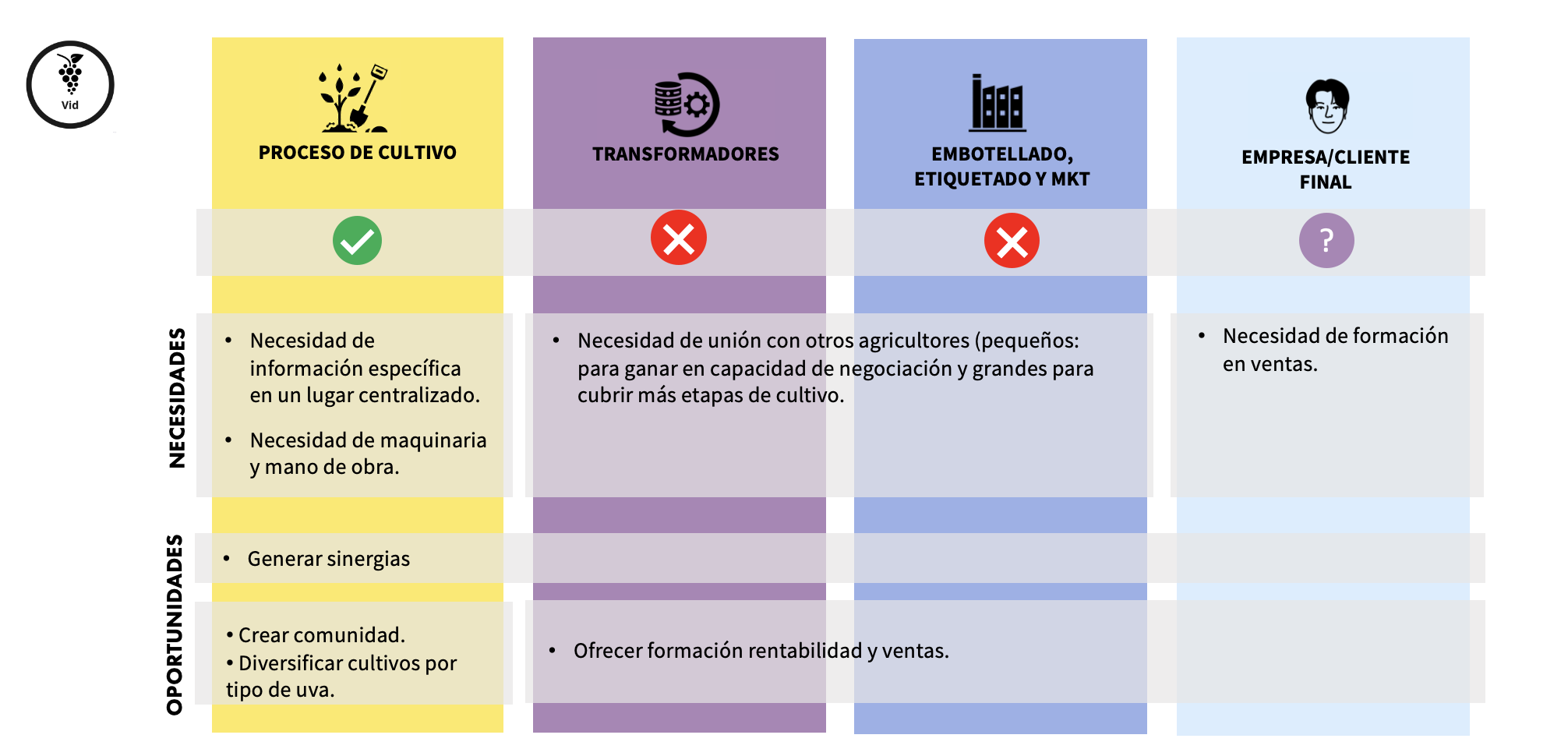
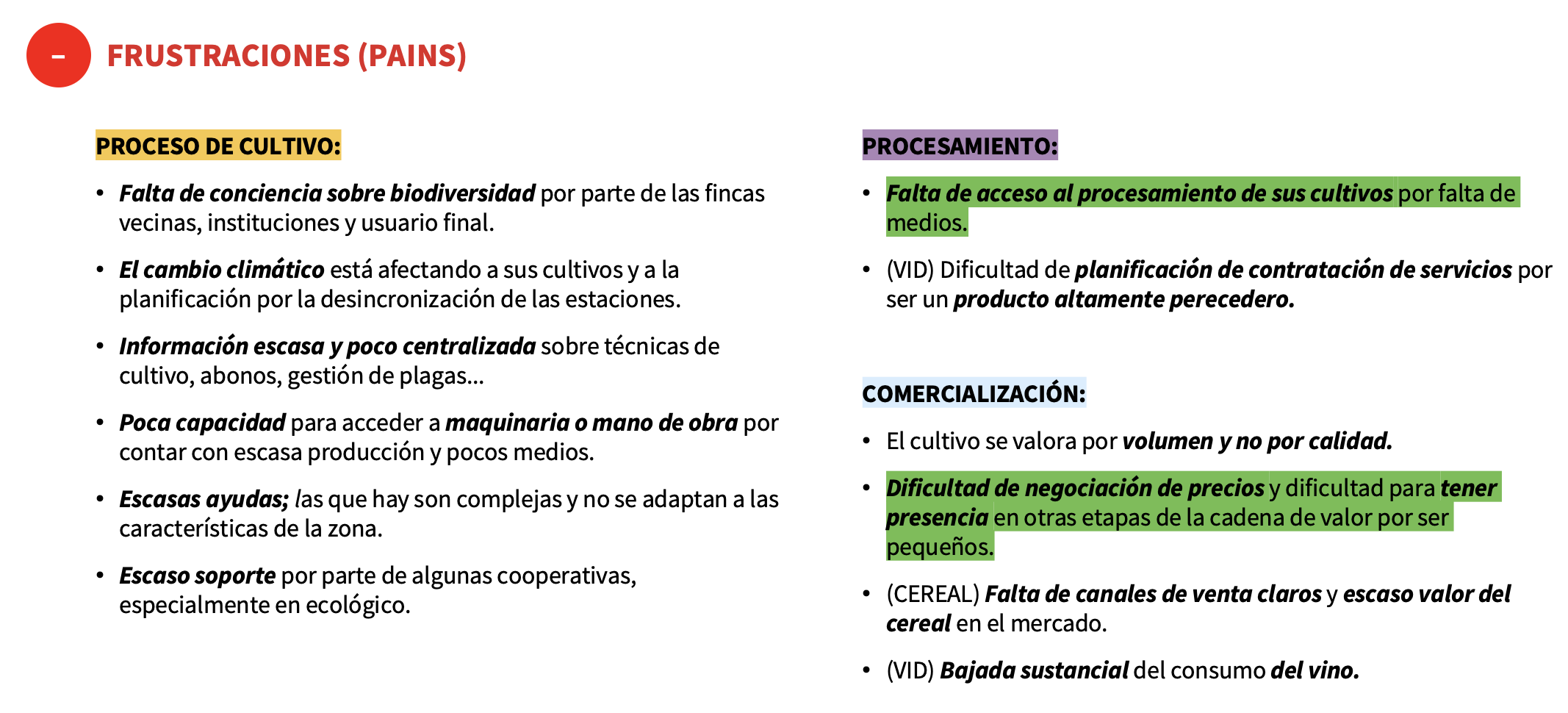
- Mapping the cereal and vineyard value chains to uncover pain points and loss of traceability.
- Co-creating and validating new service models with pilot farms to reinforce local supply chains.
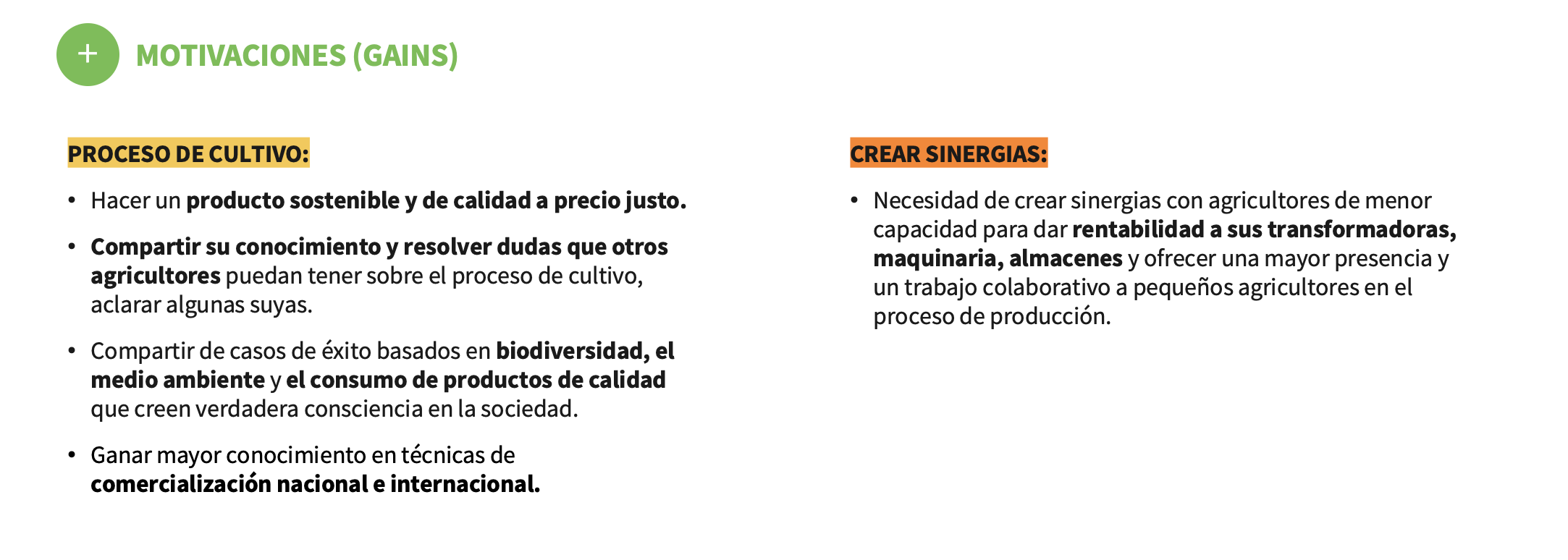
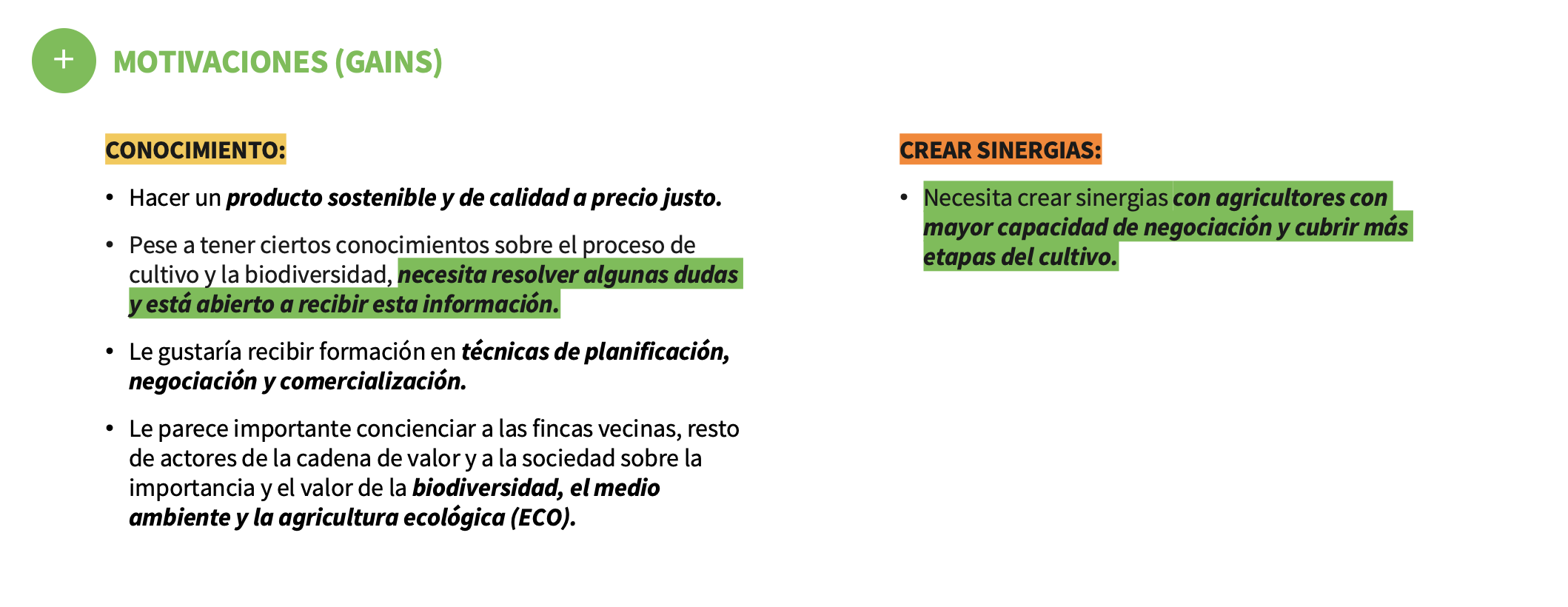
- Contributing to the definition of the biodiversity certification seal by aligning user needs (farmers and consumers) with ecological impact indicators.
- Ensuring that pilots could evolve into sustainable models, allowing farms to continue autonomously with the seal and the value chain synergies developed.

DEFINING THE SOLUTION:
The Process:
We began with in-depth qualitative and quantitative research, including stakeholder interviews, focus groups,
and comparative market analysis on cereal and vineyard production, performance, imports, and exports across Europe.
This allowed us to understand Spain's positioning and the key gaps in the farmers’ value chain.
Based on this understanding, we identified critical breakpoints in product traceability and co-designed pilot projects that tested simplified,
shorter chains with clear synergies among actors. The service design approach enabled us to iteratively validate these strategies
in real agricultural contexts, while also creating a biodiversity certification seal aligned with consumer values and expectations.
The result was a set of actionable insights and validated models that participating farms could sustain autonomously,
combining environmental
responsibility with economic viability.